By Nik Lindstrom
Co-founder & CTO at unitQ

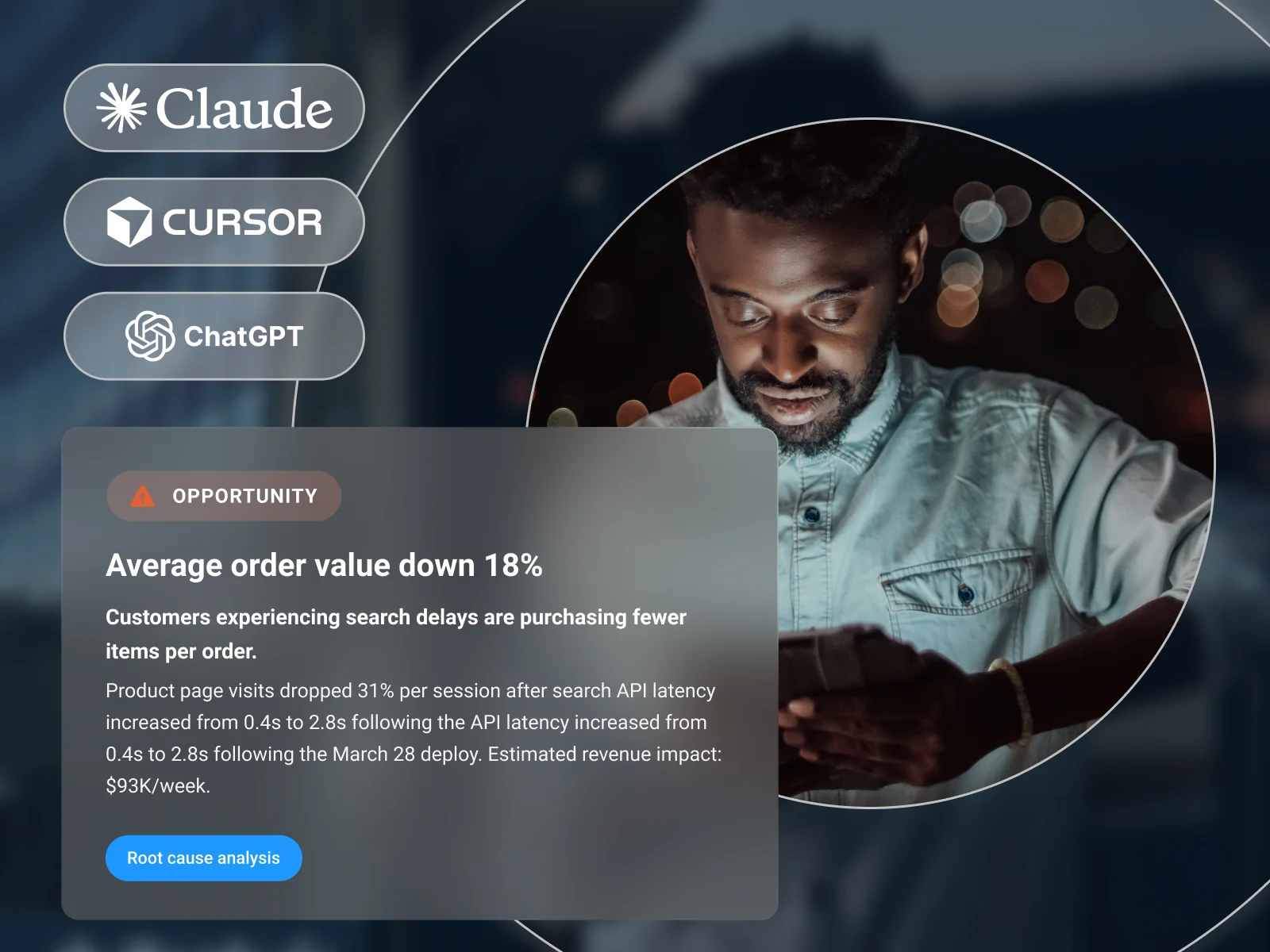
AI agents are where real work happens now. Product managers draft roadmaps inside Claude. Engineers debug alongside Cursor. Support and CX leaders use ChatGPT to pull together executive updates. And across every team that ships a product, internal builders are stitching together custom agents that combine company data, business context, and reasoning into workflows that didn't exist a year ago. Increasingly, those agents aren't waiting to be asked. They run on schedules, watch for issues that need a human's attention, and kick off the next step before anyone reaches for it.
These tools are extraordinary at reasoning. But they're only as good as the data they can reach. And what customers are saying — arguably the most valuable signal a company has — has been one of the hardest things for those agents to reach.
More and more of the teams we work with are pulling unitQ's AI-ready customer data directly from the AI agents they already live in: Claude, ChatGPT, Cursor, and the bespoke agents their own teams are building. Those agents aren't just talking to unitQ. They're plugged into a CRM, a roadmap tool, a data warehouse, a billing system. The unitQ MCP server adds the customer-voice layer that's been missing from the mix.
The roadmap memo, the bug investigation, the QBR brief, the custom internal agent — every one of them gets sharper when the agent doing the work can access customer intelligence in real time. That means more than the words customers are using. It means the trends behind them, the segments most affected, and the citations behind every claim.
Inside the unitQ platform, agentQ is your AI agent for customer insights. It's how you ask the hardest questions of your customer data — things like "Of every issue customers raised this quarter, which correlates with the steepest drops in 30-day retention, and which customer segments are taking the hit?" agentQ returns ranked, source-grounded answers in seconds, and it remains the richest, most opinionated way to dig into your customer feedback inside unitQ.
The MCP server doesn't replace any of that. It extends the same underlying AI-quality intelligence outward, so the AI agent your team already has can access the same AI-ready data layer that powers agentQ. Your teams choose the right surface for the work in front of them.
Inside unitQ, agentQ is the analyst.
Inside your AI agents, the MCP server is what makes those agents finally useful for customer-data work.
What makes these answers worth acting on isn't the AI agent or the MCP server. It's what's underneath.
Most customer data isn't AI-ready by default. It arrives in 17 languages and 12 formats: support tickets with screenshots, call-center transcripts with crosstalk, social posts with sarcasm, surveys with free-text fields. It's scattered across dozens of tools, full of personally identifiable information (PII), and the same complaint shows up worded 50 different ways across 5 sources. Hand that to an off-the-shelf AI agent and you get a confident-sounding answer that can't be trusted.
We’ve spent years building the layer that fixes this. On our side, it comes down to three things:
Centralize. Every customer signal lives in a single real-time source of truth, tied to your KPIs: tickets, chats, surveys, reviews, social, calls, app stores, in-product behavior, operational data, and more. With ingestion from 100+ sources, an AI agent isn't reasoning from a slice — it's reasoning from the same system of record for quality that powers the unitQ platform.
Clean. Signal is separated from noise: duplicates are removed, content is translated across 100+ languages, personal information is stripped, and the data is normalized. The chaos of raw customer language becomes queryable.
Categorize. Thousands of stable categories get applied automatically across millions of records — auditable, consistent, and cited back to the underlying customer feedback. The result is specific enough to resolve a vague signal like "customers are unhappy with checkout" down to "premium-tier customers on Android are abandoning checkout after a promotional coupon fails to apply." That’s the level of specificity that actually informs a fix.
The reason all of that matters for your AI agent is what it's suddenly capable of:
Consistent categories. The same customer concern is named the same way across every channel and every period. Your agent returns the same answer to the same question, no matter the source or the timeframe.
Reliable trends. Volume shifts now signal genuine customer change rather than shifts in how the data was grouped. When your agent reports a trend, it reflects real customer behavior.
Adaptive baselines. The historical rhythm of every category is known: volume, seasonality, variation. Your agent can distinguish a real anomaly from routine variation and proactively flag what matters.
Without that foundation, every agent answer about your customers is a roll of the dice. With it, you get the kind of answer a C-level executive would stake a board update on, whether the work is happening through agentQ inside unitQ, or through the AI agent your team is already working with. The MCP server inherits unitQ's full security posture, from certifications (SOC 2 Type II, GDPR, ISO 27001/27017/27018) to operational controls (role-based access, audit logging, and more), so your security team has nothing new to evaluate.
Teams using the unitQ MCP server have proven what it unlocks: customer intelligence reachable from every AI agent in their stack, combined with whatever other systems the work requires.
Mid-document in their AI agent of choice, the PM asks: "Of the customer-reported issues from our last release, which are showing up most often in accounts that have since churned or downgraded? Match each to the open items in our roadmap tool, exclude anything already in flight, rank what's left by revenue impact, and flag any where competitors' customers are reporting the same pain."
The answer pulls from every connected system at once. From the unitQ side, monitorQ supplies the customer signal and segmentation, metricQ the hit to weekly transaction volume and revenue impact, and competeQ flags which of these pain points are also showing up in competitors' customer feedback. The roadmap tool supplies what's already in flight. The PM walks away with a defensible roadmap shortlist informed by both customer pain and competitive context, without ever leaving the document they were drafting.
A bug ticket lands in the queue. With monitorQ, the team's source control, and their observability platform all reachable from the agent in their editor, the engineer asks one question and gets a stitched answer: which customers reported what, which recent code changes touched the affected area, and which production errors line up. The investigation that used to mean toggling between four windows happens in one place. Resolution time drops; the fix gets prioritized correctly the first time.
Before a Monday readout, the head of CX asks an AI agent to synthesize trending customer issues from the last week, then joins with the customer success platform to flag which strategic accounts are affected and which renewals are at risk.
From the unitQ side, supportQ supplies the customer signal — drawn from every human and AI support interaction. The CS platform provides account tier, health score, and renewal date. What used to be half a day of manual digging becomes a five-minute prompt, with every claim citable.
In each case, the AI agent is doing what AI agents are great at: reasoning across whatever context it's been given. What unitQ adds is a customer-voice layer the agent can actually trust — with answers that trace back to specific pieces of customer feedback, so when a stakeholder asks "how do you know that?", there's a real answer.
That's the promise of customer intelligence for AI agents: every roadmap memo, RCA, QBR brief, and executive readout grounded in the same AI-ready customer reality — no matter which AI agent the team is working in.
Bring AI-quality intelligence into every AI agent your team uses. Join us live on Tuesday, May 19, at 10am PT / 1pm ET to learn more.
Save your seat for the May 19 webinar →
The unitQ MCP server is the connection that lets any AI agent — Claude, ChatGPT, Cursor, or a custom agent your team has built — pull unitQ's AI-ready customer data into the work it's already doing. It exposes the same customer intelligence layer that powers agentQ inside the unitQ platform, so AI agents outside unitQ can reason from the same source of truth.
The unitQ MCP server and agentQ are two surfaces for the same customer intelligence. agentQ is the AI agent that lives inside the unitQ platform, purpose-built for deep customer-feedback analysis. The MCP server extends that intelligence outward, so the AI agents your team is already using — Claude, ChatGPT, Cursor, and custom internal agents — can reach the same AI-ready customer data without leaving the tools they live in.
The unitQ MCP server works with any AI agent that supports the Model Context Protocol (MCP) standard. That includes Claude, ChatGPT, Cursor, and the bespoke agents internal teams are building on top of company data, business context, and reasoning models.
For customer data to be AI-ready, it has to be centralized, cleaned, and categorized in a way an AI agent can reason from reliably. unitQ centralizes signals from 100+ sources, removes duplicates, translates content across 100+ languages, strips personal information, and applies thousands of stable categories with citations back to the underlying feedback. AI-ready data is what separates a trustworthy AI agent answer from a confident-sounding guess.
The unitQ MCP server keeps AI agent answers trustworthy by exposing data that's been centralized, cleaned, and consistently categorized — with citations back to the original customer feedback for every claim. When a stakeholder asks "how do you know that?", the agent has a real, source-grounded answer rather than a hallucination dressed in confident language.
You don't need agentQ to use the unitQ MCP server. The two are complementary surfaces for the same underlying customer intelligence — most teams use agentQ for deep analysis inside unitQ and the MCP server to bring that same intelligence into the AI agents they live in elsewhere.
The unitQ MCP server pulls from every source unitQ ingests — 100+ in total — including support tickets, chats, surveys, reviews, social posts, call-center transcripts, app stores, in-product behavior, and operational data. That breadth is what makes it possible for an AI agent to reason across the full customer reality rather than a single channel. It's the same foundation that powers monitorQ, the real-time customer feedback intelligence product at the center of the unitQ platform.
unitQ strips personally identifiable information (PII) from customer feedback as part of the cleaning process that makes data AI-ready. By the time an AI agent queries the unitQ MCP server, the data has already been normalized, translated, and de-identified — so customer privacy is preserved across every agent interaction.
Join product and CX leaders getting the latest on customer intelligence, once a month.